
Sodium lactate is a versatile chemical compound that finds extensive use in various industries, including food, cosmetics, and pharmaceuticals. As a leading supplier of sodium lactate, I have witnessed firsthand its remarkable properties and the diverse ways it interacts with other chemicals. In this blog post, I will delve into the fascinating world of sodium lactate and explore how it interacts with different substances, shedding light on its significance in various applications.
Chemical Structure and Properties of Sodium Lactate
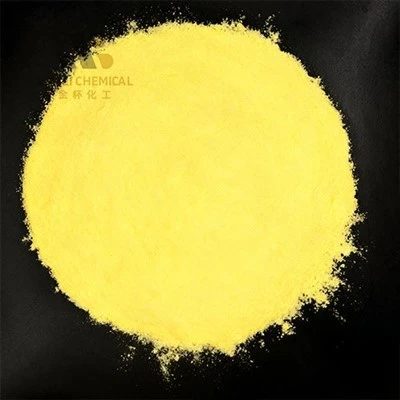
Before we explore its interactions, let's briefly understand the chemical structure and properties of sodium lactate. Sodium lactate is the sodium salt of lactic acid, with the chemical formula C₃H₅NaO₃. It is a clear, colorless to yellowish liquid or a white crystalline powder, depending on its form. Sodium lactate is highly soluble in water, making it easy to incorporate into aqueous solutions.
One of the key properties of sodium lactate is its ability to act as a buffering agent. It helps maintain the pH of a solution within a specific range, which is crucial in many industrial processes. Additionally, sodium lactate has moisturizing and humectant properties, making it a popular ingredient in cosmetics and personal care products.
Interaction with Acids
Sodium lactate can interact with various acids in different ways. When sodium lactate reacts with a strong acid, such as hydrochloric acid (HCl), a neutralization reaction occurs. The hydrogen ions (H⁺) from the acid react with the lactate ions (C₃H₅O₃⁻) from sodium lactate to form lactic acid (C₃H₆O₃), while the sodium ions (Na⁺) combine with the chloride ions (Cl⁻) from the acid to form sodium chloride (NaCl).
[
\mathrm{NaC_3H_5O_3 + HCl \rightarrow C_3H_6O_3 + NaCl}
]
This reaction is important in many industrial processes, such as the production of lactic acid and the adjustment of pH in food and beverage products.
Sodium lactate can also interact with weak acids, such as Citric Acid Anhydrous and DL-Malic Acid. In these cases, a buffer system is formed, which helps maintain the pH of the solution within a specific range. The lactate ions from sodium lactate can react with the hydrogen ions from the weak acid to form lactic acid, while the conjugate base of the weak acid can react with the sodium ions from sodium lactate to form a salt.
For example, when sodium lactate reacts with citric acid, the following reactions can occur:
[
\mathrm{NaC_3H_5O_3 + H_3C_6H_5O_7 \rightleftharpoons C_3H_6O_3 + NaH_2C_6H_5O_7}
]
[
\mathrm{NaC_3H_5O_3 + NaH_2C_6H_5O_7 \rightleftharpoons C_3H_6O_3 + Na_2HC_6H_5O_7}
]
These buffer systems are commonly used in the food and beverage industry to control the acidity and flavor of products.
Interaction with Bases
Sodium lactate can also interact with bases. When sodium lactate reacts with a strong base, such as sodium hydroxide (NaOH), a reaction occurs to form sodium lactate and water.
[
\mathrm{NaC_3H_5O_3 + NaOH \rightarrow Na_2C_3H_4O_3 + H_2O}
]
This reaction is important in the production of sodium lactate salts and the adjustment of pH in alkaline solutions.
In addition, sodium lactate can interact with weak bases, such as ammonia (NH₃). In this case, a buffer system can be formed, which helps maintain the pH of the solution within a specific range. The lactate ions from sodium lactate can react with the ammonium ions (NH₄⁺) from ammonia to form lactic acid and ammonium lactate.
[
\mathrm{NaC_3H_5O_3 + NH_3 + H_2O \rightleftharpoons C_3H_6O_3 + NH_4C_3H_5O_3}
]
These buffer systems are commonly used in the pharmaceutical and cosmetic industries to control the pH of products.


Interaction with Salts
Sodium lactate can interact with various salts in different ways. For example, when sodium lactate reacts with Tripotassium Citrate, a double displacement reaction can occur. The sodium ions from sodium lactate can exchange with the potassium ions from tripotassium citrate to form sodium citrate and potassium lactate.
[
\mathrm{3NaC_3H_5O_3 + K_3C_6H_5O_7 \rightarrow Na_3C_6H_5O_7 + 3KC_3H_5O_3}
]
This reaction is important in the production of citrate salts and the adjustment of the ionic strength of solutions.
Sodium lactate can also interact with metal salts, such as calcium chloride (CaCl₂). In this case, a precipitation reaction can occur if the solubility product of the resulting salt is exceeded. The lactate ions from sodium lactate can react with the calcium ions from calcium chloride to form calcium lactate, which may precipitate out of the solution.
[
\mathrm{2NaC_3H_5O_3 + CaCl_2 \rightarrow Ca(C_3H_5O_3)_2 + 2NaCl}
]
This reaction is important in the production of calcium lactate and the control of calcium levels in various applications.
Interaction with Organic Compounds
Sodium lactate can interact with various organic compounds in different ways. For example, it can react with esters to form new esters through a transesterification reaction. In this reaction, the lactate group from sodium lactate replaces the alkoxy group of the ester, resulting in the formation of a new ester and an alcohol.
[
\mathrm{NaC_3H_5O_3 + RCOOR' \rightarrow RCOOC_3H_5 + R'ONa}
]
This reaction is important in the production of esters and the modification of the properties of organic compounds.
Sodium lactate can also interact with aldehydes and ketones through a condensation reaction. In this reaction, the lactate group from sodium lactate can react with the carbonyl group of the aldehyde or ketone to form a new compound with a hydroxyl group.
[
\mathrm{NaC_3H_5O_3 + RCHO \rightarrow RCH(OH)C_3H_5O_3 + NaOH}
]
This reaction is important in the synthesis of organic compounds and the modification of the properties of aldehydes and ketones.
Applications of Sodium Lactate Based on Its Interactions
The interactions of sodium lactate with other chemicals have numerous applications in various industries. In the food industry, sodium lactate is used as a preservative, flavor enhancer, and pH regulator. Its ability to interact with acids and bases helps maintain the pH of food products within a specific range, which is important for their stability and shelf life. Additionally, sodium lactate can interact with salts and organic compounds to enhance the flavor and texture of food products.
In the cosmetic industry, sodium lactate is used as a moisturizer, humectant, and pH regulator. Its ability to interact with water and other chemicals helps keep the skin hydrated and soft. Additionally, sodium lactate can interact with other ingredients in cosmetic products to enhance their stability and effectiveness.
In the pharmaceutical industry, sodium lactate is used as a buffering agent, isotonic agent, and vehicle for drug delivery. Its ability to interact with acids, bases, and salts helps maintain the pH and osmotic pressure of pharmaceutical solutions, which is important for the stability and effectiveness of drugs. Additionally, sodium lactate can interact with other drugs and excipients to enhance their solubility and bioavailability.
Conclusion
In conclusion, sodium lactate is a versatile chemical compound that can interact with various acids, bases, salts, and organic compounds in different ways. These interactions have numerous applications in various industries, including food, cosmetics, and pharmaceuticals. As a leading supplier of sodium lactate, I am committed to providing high-quality products and technical support to our customers. If you are interested in learning more about sodium lactate or have any questions about its applications, please feel free to contact us for further discussion and potential procurement opportunities.
References
- "Sodium Lactate: Properties, Uses, and Applications." Chemical Encyclopedia.
- "Food Chemistry: Principles and Applications." Textbook on food chemistry.
- "Cosmetic Science and Technology." Textbook on cosmetic science.
- "Pharmaceutical Dosage Forms and Drug Delivery Systems." Textbook on pharmaceutical science.